From first prototype to production scale — Circuits Central manufactures the electronics that power robotics platforms. Motor control, embedded compute, power management, and sensor systems, built for teams across the robotics sector in Toronto, Ontario, and across Canada.
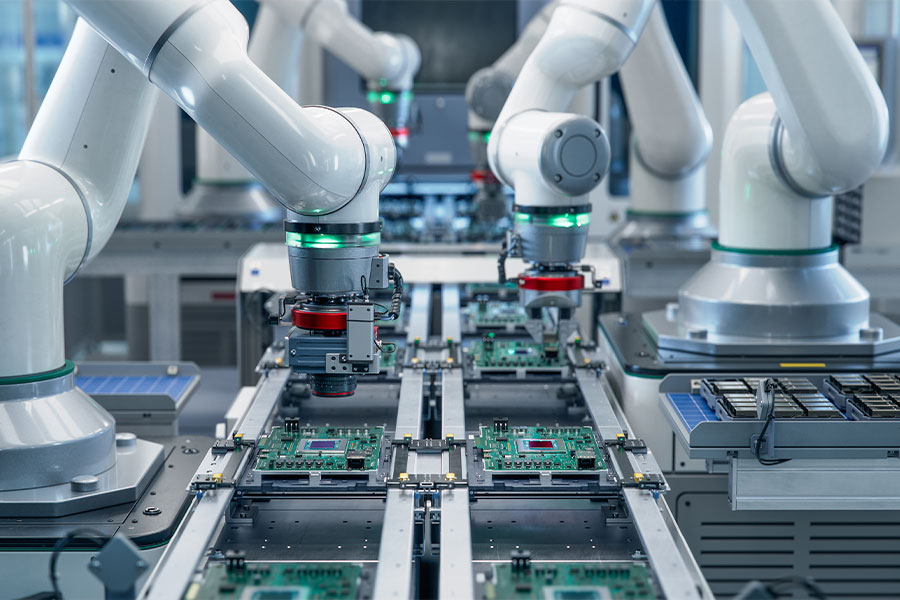
Robotics hardware is among the most demanding electronics to build reliably. Mechatronics engineers, embedded engineers, and systems engineers in the robotics sector work with board types that rarely appear in mainstream commercial electronics — motor control, embedded compute, power distribution, and sensor interfaces — all operating together under continuous mechanical stress, motor electrical noise, and tight form factor constraints. Circuits Central has the experience to build these assemblies correctly from the first prototype, and the process discipline to maintain that quality as volumes scale.
Startup to production scale: Circuits Central has worked with robotics companies from their earliest prototype boards through significant production volumes, growing alongside teams as their products and headcount scaled. That build history — the component decisions, DFM iterations, sourcing knowledge, and test development — doesn’t start over with each new order. It compounds.
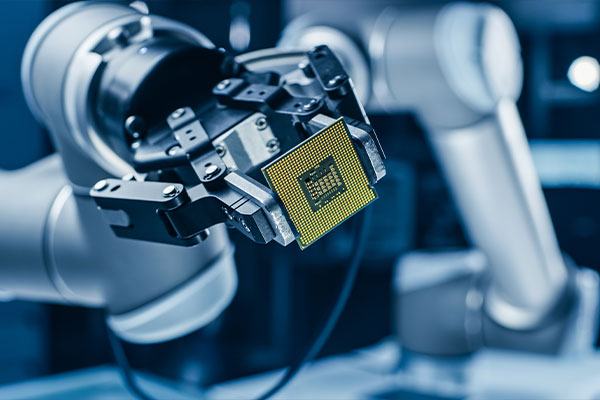
Motor Control & Servo Drives
BLDC and servo motor driver boards, gate drive circuits, current sensing loops, encoder interfaces, and multi-axis coordination electronics. High-current copper requirements, thermal management from FETs and regulators, and EMI containment are the primary DFM concerns on these boards.
Embedded Compute & Real-Time Control
Carrier boards for compute modules, real-time controller boards with industrial communication interfaces (EtherCAT, CAN, PROFINET), and custom controller designs. These boards tend to be BGA-heavy and density-constrained, requiring careful DFM review and X-ray verification at first article.
Power Distribution & BMS
DC/DC power boards, point-of-load regulators for compute and sensor rails, battery management system (BMS) boards for mobile platforms, protection circuits, and docking/charging interface boards. Power transients from motor actuation create specific requirements for decoupling, filtering, and protection design that show up at assembly.
Sensor Hubs & IMU Boards
Sensor interface boards aggregating IMUs, encoders, force/torque sensors, ToF distance sensors, and condition monitoring inputs. Analog signal integrity, low-noise power references, and mixed-signal partitioning are the dominant assembly considerations — component placement decisions made during layout directly determine whether the build performs as the schematic intends.
Perception & Vision Support Boards
Camera interface boards, vision compute carriers, and sensor fusion hubs for LiDAR, stereo cameras, and depth sensors. High-speed connector selection, ESD protection on camera interfaces, and stable, low-noise power for imaging devices are the assembly-level issues that distinguish a first build that works from one that requires re-spins.
System Integration & Box Build
Beyond individual boards, Circuits Central provides box build assembly services that extend to cable and harness assembly, mechanical integration, and system build. For robotics teams looking to consolidate their supply chain, this reduces vendor handoffs and maintains cleaner traceability across the full assembly.
Robotics companies have a manufacturing challenge that’s different from most industries: designs change rapidly during development, then need to stabilize quickly as the product proves itself and demand grows. An offshore manufacturer optimized for stable, high-volume production isn’t the right partner during the years when a design is still evolving. A local CM without the process discipline to support scale isn’t the right partner once it does.
Circuits Central has supported robotics companies through both phases — and the transition between them. The specific advantages that compound over time:
Early Prototype Phase — Speed & Engineering Collaboration
Quick-turn builds with DFM review on each revision. Direct engineer access means issues surfaced in one build cycle are documented and addressed before the next one — not discovered again from scratch. No MOQ constraints. 24-hour assembly available for urgent builds. Sourcing flexibility for low-volume NPI quantities on parts that aren't in any distributor's stocking program.
NPI & Pilot Build Phase — Process Validation
Circuits Central supports pilot builds by stabilizing the release package, aligning sourcing strategy for production quantities, developing or integrating functional test procedures, and locking down revision control. The goal at this stage is ensuring that a design that works in prototype produces consistent results in the first production run — not discovering the delta at volume.
Production Scale — Repeatability & Build Continuity
As volumes grow, the value of build history compounds. Component decisions, approved alternates, test procedures, and DFM constraints developed during early builds are carried forward into production — reducing setup overhead on repeat orders, giving the sourcing team a head start on long-lead parts, and making ECO changes easier to manage without losing build continuity across revisions.
| Design Area | Robotics-Specific Risk | How It Shows Up |
|---|---|---|
| Copper weight on power traces | Motor driver and power stage traces routinely exceed 1oz copper capacity at operating current | Thermal failure or trace derating in first field deployment; rarely caught in bench testing |
| Connector selection | Connectors chosen for board density rather than mating cycle life in moving assemblies | Connector failure after hundreds of mating cycles; common on teach pendants, modular joint boards |
| Thermal management near drive FETs | Insufficient copper pour or thermal via density under power packages in thermally constrained enclosures | FET derating at sustained duty cycle; elevated junction temps that don't appear in short-run characterization |
| EMI from motor PWM switching | Motor drive switching noise coupling into sensor rails and analog measurement paths | IMU noise floor degradation, encoder jitter, unstable ADC readings — often blamed on firmware before the PCB root cause is identified |
| Test access on compute-heavy boards | BGA-dense layouts with minimal test points limit flying probe and ICT coverage | Failed boards hard to diagnose; bring-up debug requires oscilloscope access to pads not designed for probing |
| Component availability on power ICs | Specialized motor driver ICs, GaN FETs, and high-current inductors can carry 20–52 week lead times | Production schedule slips when long-lead parts aren't flagged and pre-ordered before kitting |
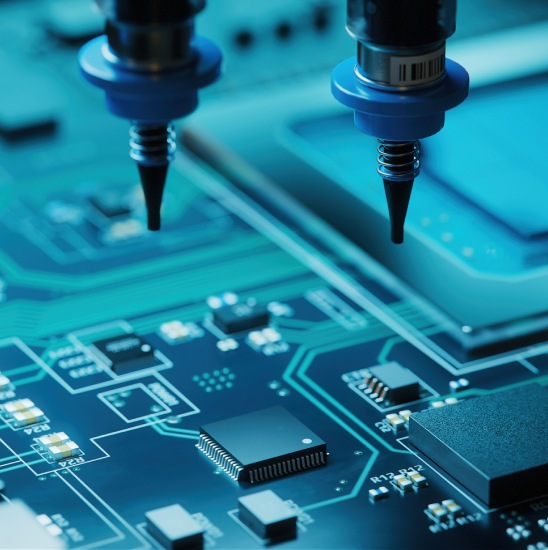
Robotics assemblies tend to have more complexity per board than general commercial electronics — mixed technology, higher layer counts, mixed signal domains, and specialized connectors. A complete data package upfront reduces clarification cycles and gives the most accurate picture of lead time and cost:
 Posted on Google
 Mohamad Nizar Kezzo
Trustindex verifies that the original source of the review is Google.
Excellent PCB assembly services. We have had an excellent experience with Circuits Central. - Turn Around Time: Boards were always assembled on time including expedited projects with 24-hour TAT. - Customer Service: Customer service is fast to respond over email and resolve any outstanding issues very quickly. - Quality: Excellent assembly quality with no errors or issues including for complex projects. - Communication: Circuits Central made the jobs simple to submit. We didn't have to submit many files or prepare every last detail for them.Posted on Google Robert BollCircuits Central has been making our boards for over 25 years. They are a great company to work with.Posted on Google
 Denis KouroussisGreat customer service! Highly recommend the team at CCIPosted on Google
 Elsbeth Dishington
Trustindex verifies that the original source of the review is Google.
I've been using Circuits Central for over 10 years for all of our NPI projects. Workmanship is exceptional and deliveries are always on time. Many thanks to the Circuits Central team.Posted on Google Patrice ChartrandExcellent service and printed circuit assembly quality for 6 years so far, at a very reasonable price. Highly recommended!Posted on Google
 Marko VasiljevicTailored Service Levels and Pricing. Excellent quality!
Please fill out the form below and we will get in touch with you to further discuss your needs.
