Canada’s responsive electronics manufacturing partner — no minimum order, 24-hour turnaround available, and a team that reviews your design files before building, not after problems appear.

Prototypes are where design assumptions become measurable results. A quick-turn build is only valuable when it delivers reliable data — not ambiguous results from a poorly assembled board. At Circuits Central, we treat every prototype with the same engineering attention we apply to production runs.
Located in Toronto, Ontario — just north of Toronto, Circuits Central serves engineers, startups, and product companies across the Greater Toronto Area, Ontario, and all of Canada. Same timezone, direct communication, and no offshore delays.
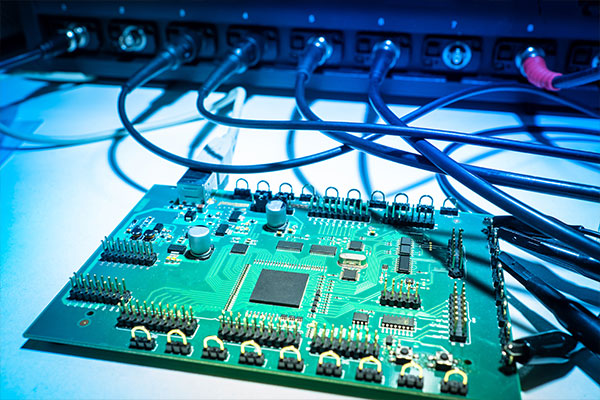
24-Hour Assembly
Urgent builds can qualify for next-day assembly. Eligibility depends on component availability and design complexity — contact us to confirm.
Full Turnkey
No minimum or maximum quantity. We source, kit, assemble, and inspect — from a single board to hundreds of units.
DFM Review
Manufacturability check before the first paste print — polarity, footprints, paste apertures, silkscreen, and documentation completeness.
First Article Inspection
FAI validates the first assembled unit against your BOM, placement file, and assembly drawing before the rest of the run is completed.
Component Planning
Lifecycle risk review, obsolescence alerts, and approved alternates planning so your BOM stays buildable across revisions.
Quote & Manufacturability Review
We review your complete fabrication and assembly data package as a set — Gerbers, BOM, centroid file, and assembly drawing. We flag missing or ambiguous items and confirm build assumptions that affect schedule and yield before committing to a lead time.
Sourcing, Kitting & Alternates
All parts are purchased through authorized North American distributors (Digi-Key, Mouser, Newark, Avnet, Future). If alternates are permitted on your BOM, we confirm equivalency and document all substitutions before kitting begins.
Programming, Setup & Stencil Preparation
We prepare assembly programs, stencils, and special handling instructions for fine-pitch devices, polarized parts, BGAs, and controlled impedance constraints that require specific process attention.
Assembly, AOI & First Article
SMT assembly proceeds per build notes. Automated optical inspection (AOI) runs at defined checkpoints. FAI validates the first unit before the full lot is completed — catching issues early keeps the project on schedule.
Release with Documentation
Boards ship with agreed inspection records, any deviations noted, and constructive feedback for your next design revision. We close the loop so your next build is better than the last.
Different programs need different levels of material control. Choose the model that matches your timeline and risk profile:
| Supply Model | Pros | Considerations |
|---|---|---|
| Full Turnkey | Single coordination point, reduced internal workload, easier schedule management when parts are volatile | Requires clear alternates policy and complete BOM with manufacturer part numbers |
| Consigned | Maximum control of exact components; useful for pre-purchased inventory or customer-supplied parts | Missing or mislabeled parts can delay the build; kitting accuracy is critical path |
| Hybrid (Partial Turnkey) | You control hard-to-source items; we handle the rest — good balance of control and momentum | Requires careful reconciliation to avoid gaps or duplicates between your kit and the final BOM |
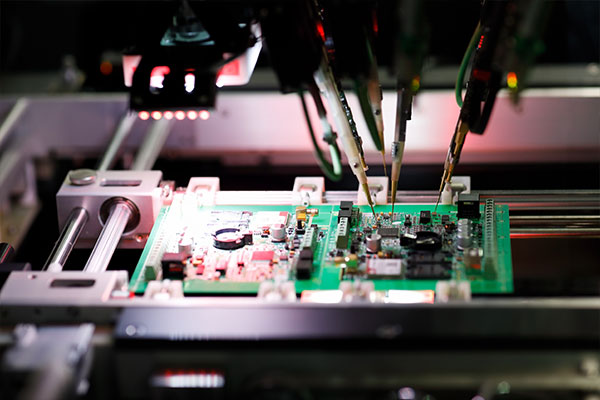
The fastest builds start with the most complete data. A well-prepared handoff package typically includes:
Standard assembly turnaround begins once the kit is complete — meaning all required components and bare boards have been received, verified, and are ready to build. Typical assembly turnaround is two weeks, though urgent builds can be accommodated in as little as 24 hours or the same business day depending on design complexity and production loading. The most common causes of delays are component availability issues, long-lead items without approved alternates, and mismatches between the BOM and pick-and-place file. For time-sensitive programs, discussing the build schedule during quoting gives the most accurate picture of what is achievable.
Turnkey means Circuits Central procures components and bare PCBs on your behalf, handles kitting, and performs assembly and agreed inspection or testing — reducing coordination overhead for the customer. Consignment means the customer supplies some or all materials, which is common when there is existing inventory to consume or tightly controlled preferred suppliers. Mixed supply blends both approaches and is often the most practical option, allowing customers to retain control over specialized or long-lead parts while offloading the majority of procurement and kitting. The right model depends on your lead times, available inventory, and how much sourcing risk you want to carry.
For an accurate and timely quote, Circuits Central typically needs the BOM, Gerber files or fabrication outputs, pick-and-place file, assembly drawings and notes, target quantities, delivery expectations, and any test or programming requirements. Complete and consistent inputs reduce quoting delays caused by BOM discrepancies, missing reference data, or unclear alternates, and they improve the accuracy of both pricing and lead time estimates.
Yes. Circuits Central is structured to support programs at any stage, from first prototype builds through high-mix or volume production runs. The approach at each stage differs — early builds prioritize speed and iteration, while production focuses on repeatability, controlled change management, and risk reduction. Documentation, sourcing strategy, and test requirements are aligned to the program’s stage so that learnings from prototypes carry forward cleanly into stable production outcomes.
Yes, and it’s one of the most common issues we catch during the pre-build review. Rotation and origin convention mismatches between the placement file and the fabrication data are a frequent source of uniform placement offsets when switching between EDA tools or CAM viewers. We validate your centroid file against the assembly drawing and flag any inconsistencies before the first paste print — not after the first panel comes off the line. If you can share both the placement export and the board origin convention you used, we can resolve it before the build starts.
Yes. FAI is included on every prototype and production build. It validates the first assembled unit against your BOM, placement file, and assembly drawing before the rest of the run is completed. This typically covers component identity and orientation, polarity, solder quality on accessible joints, and any specific callouts from the assembly drawing. For assemblies with BGA or other hidden joints, X-ray inspection is used as part of the FAI process. Catching issues on the first board is significantly less costly than discovering them across a completed lot.
 Posted on Google
 Mohamad Nizar Kezzo
Trustindex verifies that the original source of the review is Google.
Excellent PCB assembly services. We have had an excellent experience with Circuits Central. - Turn Around Time: Boards were always assembled on time including expedited projects with 24-hour TAT. - Customer Service: Customer service is fast to respond over email and resolve any outstanding issues very quickly. - Quality: Excellent assembly quality with no errors or issues including for complex projects. - Communication: Circuits Central made the jobs simple to submit. We didn't have to submit many files or prepare every last detail for them.Posted on Google Robert BollCircuits Central has been making our boards for over 25 years. They are a great company to work with.Posted on Google
 Denis KouroussisGreat customer service! Highly recommend the team at CCIPosted on Google
 Elsbeth Dishington
Trustindex verifies that the original source of the review is Google.
I've been using Circuits Central for over 10 years for all of our NPI projects. Workmanship is exceptional and deliveries are always on time. Many thanks to the Circuits Central team.Posted on Google Patrice ChartrandExcellent service and printed circuit assembly quality for 6 years so far, at a very reasonable price. Highly recommended!Posted on Google
 Marko VasiljevicTailored Service Levels and Pricing. Excellent quality!
Please fill out the form below and we will get in touch with you to further discuss your needs.
