
Ensuring Reliability: Electronics Assembly Testing Explained
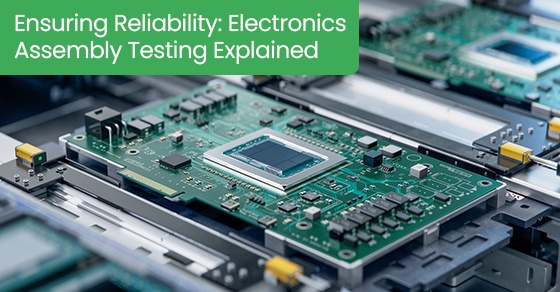
Building high-performing electronics doesn’t end with design or production. The real benchmark of success lies in how well the product works once it’s assembled and in the hands of the user. That’s where electronics assembly testing comes in. As a critical part of the manufacturing process, it verifies that components have been properly installed and perform as expected, safeguarding reliability and long-term performance. At Circuits Central, we integrate rigorous testing protocols to ensure that every printed circuit board assembly (PCBA) we deliver meets exacting standards.
The Role of Assembly Testing in Reliable Electronics Manufacturing
What Is Electronics Assembly Testing?
Electronics assembly testing refers to the process of evaluating a fully assembled printed circuit board to confirm that all components are functioning correctly and are properly installed. This includes checking connections, identifying faulty parts, and verifying electrical performance against design expectations.
Testing usually takes place at the final stages of the assembly process, just before the product moves on to packaging or integration. It acts as a safety net, capturing any issues before the product reaches the customer.
Typical components tested during this stage include:
- Resistors and capacitors
- Integrated circuits (ICs)
- Solder joints and interconnects
- Diodes and transistors
These tests ensure that the components are not just present, but performing within expected parameters.
Manufacturers often use a mix of manual and automated testing, depending on the complexity of the product. Manual inspections might be suitable for low-volume or prototype builds, while automated testing is essential for high-volume production where consistency and speed are key.
Common Assembly Testing Methods
- In-Circuit Testing (ICT): Verifies component values, orientation, and placement. Ideal for identifying short circuits, opens, or incorrect values. ICT is especially effective for complex boards with dense component populations, as it can pinpoint issues with specific pins or nets without needing the device powered on.
- Functional Testing: Simulates real-world operating conditions to ensure the entire circuit works as intended under expected use scenarios. This method checks the interaction between components and confirms that the board behaves as required when subjected to standard voltage, current, and signal inputs.
- Automated Optical Inspection (AOI): Uses high-resolution cameras to detect visual defects such as poor solder joints, missing components, or misaligned parts. AOI systems compare actual board images against reference models to identify inconsistencies and defects quickly.
Other supporting methods may include X-ray inspection for BGA components, boundary scan testing for inaccessible pins, and environmental stress screening for mission-critical applications.
Benefits of Assembly Testing for Reliability
Assembly testing helps manufacturers catch issues before products are released, leading to:
- Fewer defective units reaching the market
- Greater customer trust in product reliability
- Lower rates of costly rework or full-scale recalls
Identifying problems during production means faster corrective action and less disruption downstream. For example, a misaligned microchip caught during AOI can be quickly reflowed, while a faulty IC identified during ICT can be replaced before it causes broader failures.
For companies supplying products in regulated industries like aerospace, automotive, or medical devices, comprehensive testing also supports compliance with safety standards and regulatory requirements.
The Role of Quality Assurance in Assembly Testing
Quality assurance (QA) underpins effective assembly testing by ensuring every procedure is executed consistently and documented thoroughly. QA teams are responsible for:
- Verifying that testing protocols align with industry and regulatory standards
- Maintaining documentation and traceability for each batch of tested boards
- Reviewing testing outcomes for trends that inform process improvements
This systematic approach not only supports quality at the point of inspection, but also across the entire production line. QA helps reduce variability in output, identifies weaknesses in assembly processes, and supports proactive rather than reactive problem-solving.
Additionally, QA documentation creates an audit trail for clients, which is increasingly important in industries requiring ISO, IPC, or other quality certifications. Data-driven QA practices allow manufacturers to benchmark performance over time and adjust workflows to improve efficiency.
Supporting Product Performance Through Functional Test Procedures
Functional testing serves as the final checkpoint before a product is released. It replicates how the device will operate in real-world conditions, ensuring it can withstand expected inputs, power fluctuations, and workload scenarios.
While visual and circuit-level tests can confirm that a board is built correctly, only functional testing proves that it will work correctly. By subjecting the assembly to realistic usage patterns, functional testing can:
- Uncover latent defects that only appear under load
- Validate timing, logic, and signal behaviour across circuits
- Reinforce long-term durability and reliability
Functional tests can also be customized to client-specific parameters. For example, a board designed for automotive use might be tested for thermal cycling and vibration endurance, while a consumer device might focus on start-up response and battery usage patterns.
By tailoring functional tests to intended applications, manufacturers can ensure optimal performance and identify rare edge-case failures that could affect product lifespan or safety.
Why Quality Assurance Matters in Electronics Manufacturing
Without consistent quality assurance, even the best-designed testing procedures fall short. QA ensures that every circuit that leaves the facility performs as reliably as the first.
It covers everything from:
- Inspection of incoming materials and components
- Metrics tracking at key production points
- Verification protocols before, during, and after assembly testing
This full-lifecycle oversight helps to catch issues early and reduce their impact. For instance, identifying a substandard batch of resistors at intake prevents costly troubleshooting later on. It also builds confidence in the final product by validating that all standards have been met.
A mature QA program also improves collaboration across teams. Engineers, assemblers, and testers work together to implement feedback loops that enhance yield and performance. This integrated model supports continuous improvement and positions manufacturers like Circuits Central as reliable partners to OEMs.
Assembly Testing That Delivers Confidence and Reliability
Electronics assembly testing stands as a vital checkpoint between production and performance. It ensures that each circuit is prepared to operate reliably under real-world conditions. Backed by thorough quality assurance and functional testing, these methods ensure customer satisfaction and long-term functionality. Learn more about our approach to quality and precision here.
Reach out to Circuits Central today at 1 (888) 602-7264, or click here to get in touch online.


