
BGA Reballing: Repairing and Extending Board Lifespan
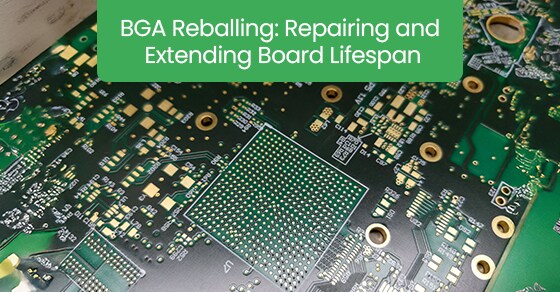
Printed circuit boards (PCBs) are the core of virtually every electronic product today. As components get smaller and more advanced, manufacturers rely on high-density chip packages like Ball Grid Arrays (BGAs) to deliver compact performance. However, BGA solder joints can fail over time due to heat cycles, mechanical stress, or manufacturing defects. That’s where BGA reballing comes in. At Circuits Central, we use this precision repair technique to restore functionality, extend board lifespan, and reduce costly replacements.
The Benefits of BGA Reballing for Long-Term PCB Reliability
What Is BGA Reballing?
A Ball Grid Array (BGA) is a surface-mount package used to house integrated circuits, with solder balls arranged in a grid pattern on the bottom of the chip. These solder balls form the electrical connections between the chip and the circuit board. Over time, solder joints can degrade or fail, especially under thermal or mechanical stress.
BGA reballing is the process of removing the faulty chip, cleaning it, replacing the solder balls, and reattaching it to the board. The full process includes:
- Removal of the BGA chip using a rework station or infrared heating system
- Cleaning of both the chip and the PCB pads to remove old solder and debris
- Reballing the chip using a stencil and fresh solder spheres
- Reflow of the reballed BGA onto the board using controlled heat
This technique is typically used when a BGA chip shows signs of failed joints, during component refurbishment, or as part of high-value PCB repair and maintenance routines.
Why BGA Reballing Improves Reliability
By replacing degraded solder joints, BGA reballing restores full electrical and mechanical integrity to the connection. This brings several advantages:
- Salvages and reuses expensive, functional chips
- Eliminates the need for full board replacement due to localized issues
- Strengthens solder joints to handle future thermal cycling and vibration
Instead of scrapping the entire assembly, reballing targets the failure source, making it a cost-effective, eco-conscious solution in modern electronics repair.
Key Signs That Reballing May Be Necessary
Common symptoms of BGA failure include:
- Intermittent or failed electrical connections, such as freezing, random resets, or boot failures
- Excessive heat buildup under or near the BGA component, indicating poor thermal contact or electrical flow
- Visual indicators like dull, cracked, or oxidized solder balls if inspected under magnification
In many cases, diagnostic tools or X-ray imaging reveal connection inconsistencies not visible to the naked eye.
Common Equipment Used in the Reballing Process
Successful BGA reballing requires precision equipment and steady hands. Typical tools used include:
- Rework stations with hot air or infrared heating for accurate chip removal and reflow
- Stencils and solder spheres for precise placement and consistent solder ball reapplication
- Cleaning materials such as flux, isopropyl alcohol, and solder wick to prep the chip and board
- Inspection tools like microscopes and x-ray systems to verify the integrity of the reballed joints
At Circuits Central, we maintain a fully equipped facility capable of handling a wide range of chip sizes and board configurations with reliable accuracy.
How PCB Repair Services Support Reballing Success
BGA reballing is most effective when integrated into a broader PCB repair process. Before reballing begins, technicians perform chip-level diagnostics to confirm the BGA is the root cause of the issue. This may involve thermal imaging, continuity tests, or signal tracing.
Once confirmed, preparation includes removing any surrounding components that could be heat-sensitive, thoroughly cleaning the board, and verifying pad condition. Technicians use anti-static precautions and precise handling techniques to avoid introducing new defects.
Proper reballing is as much about methodology as it is about tools. PCB repair experts ensure alignment, temperature control, and inspection protocols are followed throughout the process.
The Role of Chip and Circuit Repair in Board Longevity
BGA reballing is often paired with other chip or circuit-level repairs. For example:
- Chip repair might include replacing additional components affected by heat or age
- Pad repair restores damaged PCB pads that may have lifted during chip removal
- Trace repair corrects broken or burned-out circuit paths caused by shorts or stress
Together, these repairs help preserve the overall board, especially in cases where replacement is expensive or difficult. They also reduce e-waste by restoring functional hardware instead of discarding it.
In high-reliability sectors like aerospace, medical devices, and industrial controls, this kind of component-level intervention supports uptime and performance without compromising safety or compliance.
BGA Reballing Services That Restore Performance and Reliability
BGA reballing gives circuit boards a second chance at life. Through skilled rework, failed solder joints are replaced, and valuable chips are preserved—saving costs and preventing full board replacements. Reballing is an essential part of modern PCB repair, helping extend the lifespan of electronics with precision and care. Learn more about our BGA repair capabilities here.
Reach out to Circuits Central today at 1 (888) 602-7264, or click here to get in touch online.